Garbage is an increasingly pressing global environmental threat and offers a lens through which to examine local, state, and international governance and politics. When uncollected, garbage piling up on streets can be highly mobilizing: its presence viscerally disrupts the flow of life.
See my piece “The Sanitization of Garbage Politics: A Case for Studying Waste at the Local, State, and International Politics in the MENA,” in the Project on Middle East Political Science (POMEPS) Studies 46, Environmental Politics in the Middle East and North Africa.
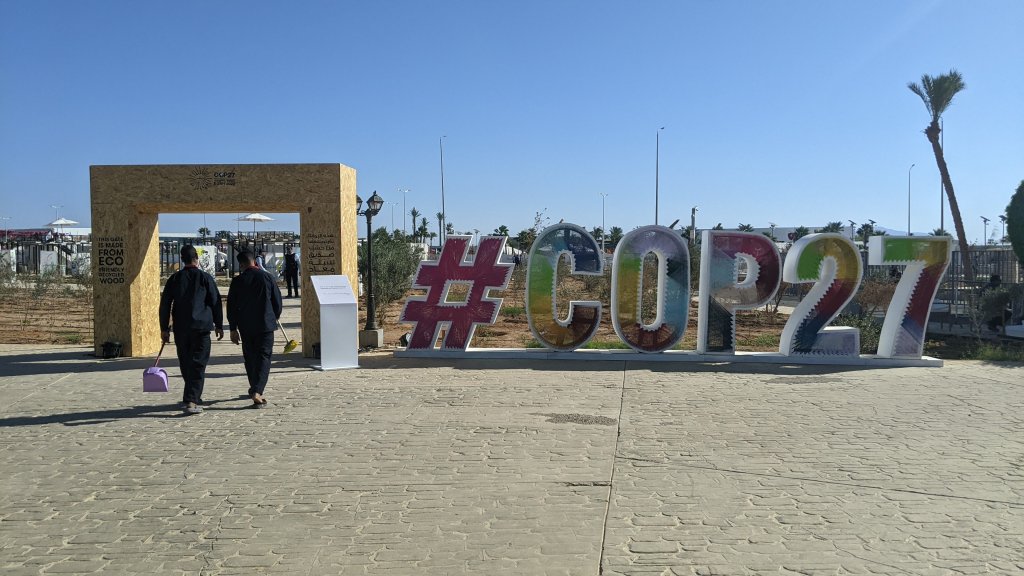
In my dissertation, I show how authoritarian states seek to “sanitize” the politics of garbage, depoliticizing it by reducing its management to a technical problem, attempting to formalize aspects of its informality, and redirecting attention from the systemic and material to the personal and abstract. I examine three countries in the Middle East and North Africa – Morocco, Egypt, and the United Arab Emirates – that have hosted the United Nations Framework Convention on Climate Change (UNFCCC) annual Conference of Parties (COP) climate summits. I analyze how hosting these massive COPs requires the production of a green spectacle built on cleaning and ordering in line with dominant norms of liberal environmentalism.
By attending to waste practices and discourses at these sites, I show how authoritarian regimes legitimize and consolidate their power. I also compare how different local environmental actors have worked to co-opt or challenge acts of sanitization, leveraging political opportunities catalyzed by the COPs.
I have conducted fieldwork in Morocco, the United Kingdom, Egypt, and the United Arab Emirates, spending a total of fourteen weeks collecting data over six research trips.
In addition to my dissertation project, I am committed to interdisciplinary and collaborative research. I participated in a collaborative ethnography of the COP26 climate summit as part of Presence2Influence, a joint research project among scholars based at Purdue and Northwestern Universities that collects data across many events about how marginalized actors influence sites of global environmental governance. Based on that research, I am lead author on a paper that builds on critical disability studies to re-conceptualize access.
 Lauren M. Baker